Starting an Online Business in Bangladesh: A Practical Guide
In this article 16 sections
- 1.Starting an Online Business in Bangladesh: What It Really Involves
- 2.Choose What to Sell: Six Online Business Models
- 3.Test Demand Before You Buy Stock
- 4.Work Out Your Numbers Per Order
- 5.Paperwork and Rules for Starting an Online Business
- 6.Payments: Cash on Delivery, bKash, Nagad and Cards
- 7.Sourcing, Stock and Packaging
- 8.Where to Sell: Facebook Page, Marketplace or Your Own Website
- 9.Delivery, Order Confirmation and Returns
- 10.Getting Your First 100 Customers
- 11.A Budget for the First Three Months
- 12.What to Track Every Week
- 13.Mistakes That Sink New Online Businesses
- 14.A 90-Day Plan for Starting an Online Business
- 15.How Nexteio Can Help You Start Selling Online
- 16.Frequently asked questions
Starting an online business in Bangladesh is easier than ever on the surface. You can open a Facebook page tonight, post a few product photos and take your first order by tomorrow. What decides whether that order turns into a real business is everything behind the post: what you sell, what each order actually earns you, how you collect payment, how the parcel travels and why a buyer would come back.
Many new sellers learn this the hard way. Orders arrive, the inbox is busy, and yet at the end of the month there is less money than expected. Delivery charges, returned parcels, ad spend and free gifts quietly eat the margin.
This guide is for anyone starting an online business they want to last: a student with a small idea, a shop owner moving online or a manufacturer who wants to sell directly. It covers choosing a business model, testing demand, working out the numbers per order, paperwork, payments, sourcing, sales channels, delivery, marketing and a first 90-day plan.
We will use realistic examples and BDT figures throughout. Treat every figure as an illustration to replace with your own numbers, not as a promise of what you will earn.
Starting an Online Business in Bangladesh: What It Really Involves
An online business is still a business. It buys or makes something, sells it at a price above its full cost, delivers it and handles the problems that follow. The internet changes how customers find you and how you talk to them. It does not remove stock, cash flow, customer service or tax.
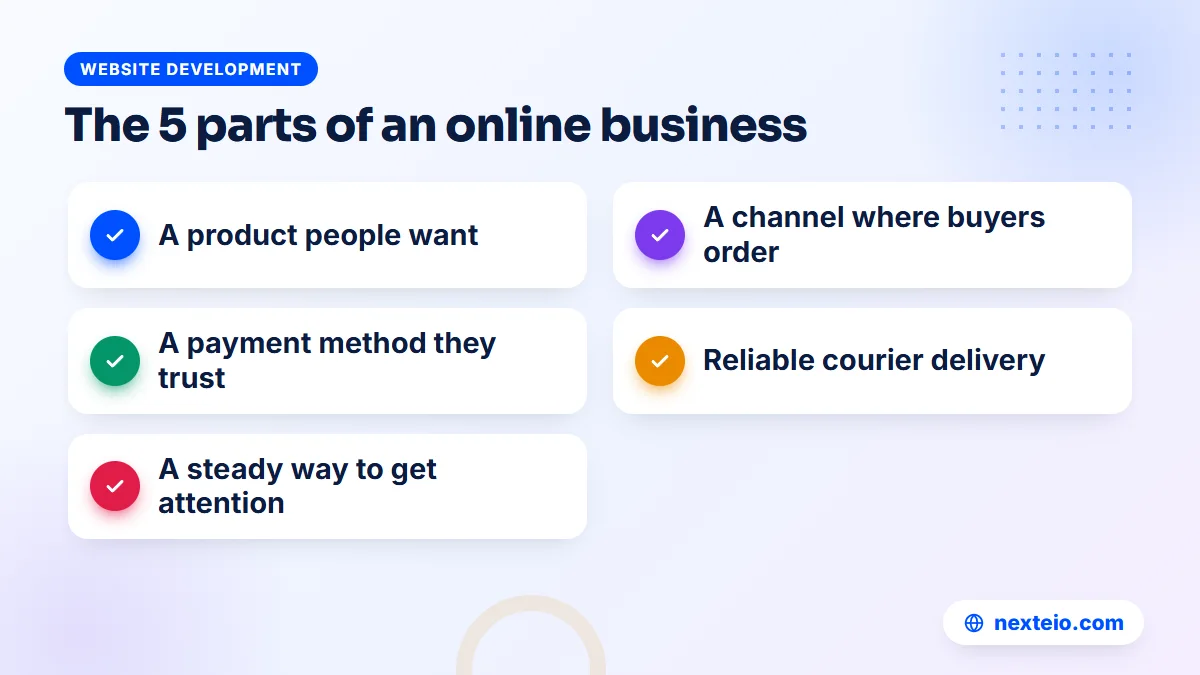
In practice, starting an online business here means building five working parts at the same time:
- A product or service that a clear group of people wants and that you can supply reliably.
- A sales channel where buyers can see it and order, such as a Facebook page, a marketplace or your own website.
- A payment method buyers trust, which for most new shops starts with cash on delivery.
- A delivery system, usually a courier service, with packing and order confirmation done properly.
- A way to get attention, through content, ads, word of mouth and repeat buyers.
If one part is weak, the others suffer. A great product with slow delivery gets bad reviews. Cheap delivery with no marketing means nobody orders. The rest of this guide takes each part in turn.
Choose What to Sell: Six Online Business Models
Before you pick a product, pick a model. The model decides how much money you need upfront, how much risk you carry and how much time each order takes. These six models cover most online sellers in Bangladesh:
| Model | How it works | Upfront money | Main risk |
|---|---|---|---|
| Resell sourced products | Buy from wholesalers or importers, sell at retail price | Medium | Unsold stock and price wars |
| Own brand or own production | Make or commission products under your name | Medium to high | Quality control and minimum order sizes |
| Made to order | Take orders first, then make the item, such as cakes or custom prints | Low | Capacity and delivery dates |
| Supplier-shipped | A local supplier packs and ships for you after you take the order | Low | No control over quality or speed |
| Digital products and courses | Sell templates, courses or downloads | Low | Copying and refund requests |
| Services sold online | Tutoring, design, repairs or consulting booked online | Low | Your time limits growth |
Most first-time sellers start with reselling or made-to-order, because both can begin small. Own-brand products give better margins and more control later.
Picking the product itself
Popular online selling products in Bangladesh include clothing, cosmetics and skincare, home and kitchen items, gadgets and accessories, baby products, home-cooked and packaged food, books and handicrafts. Popular also means crowded. A better question than "what sells?" is "what can I sell better than the pages already selling it?"
Good starter products share a few traits. They are light and hard to break, so delivery is cheap and safe. They have a price high enough to absorb delivery and ad costs, usually not the lowest-priced items. They have a clear buyer, such as new mothers, office workers or students. And you understand them well enough to answer every question a buyer asks.
Be careful with categories that carry rules or risk. Food, medicine, cosmetics and electronics may need licenses, safety standards or import papers. Fake branded goods and copied designs can get your page shut down and expose you to legal trouble.
Test Demand Before You Buy Stock
The cheapest mistake is the one you catch before buying 500 pieces. A small test tells you whether people will pay, not just whether they will like a photo.
Here is a simple way to test a product idea in two or three weeks:
- Buy a small batch, or arrange samples you can photograph and describe honestly.
- Take clear photos on a plain background and record a short video of the product in use.
- Post it on your page and in relevant groups where selling is allowed, with a real price.
- Spend a small, fixed ad budget, for example BDT 2,000 to 5,000, aimed at the buyers you have in mind.
- Count real orders, not likes or comments, and note the questions people ask.
- Deliver those orders and ask buyers what they thought.
If nobody orders at your price, the product, the price or the audience is wrong. Change one thing and test again. If orders come in and buyers are happy, you have a signal worth building on.
Keep notes from every test. The questions buyers ask become your product descriptions. Their complaints show you what to improve before the next batch.
Work Out Your Numbers Per Order
This is the section most new sellers skip, and it is the one that decides whether starting an online business makes money or just keeps you busy. You need to know what one order really earns after every cost, not just the gap between buying and selling price.
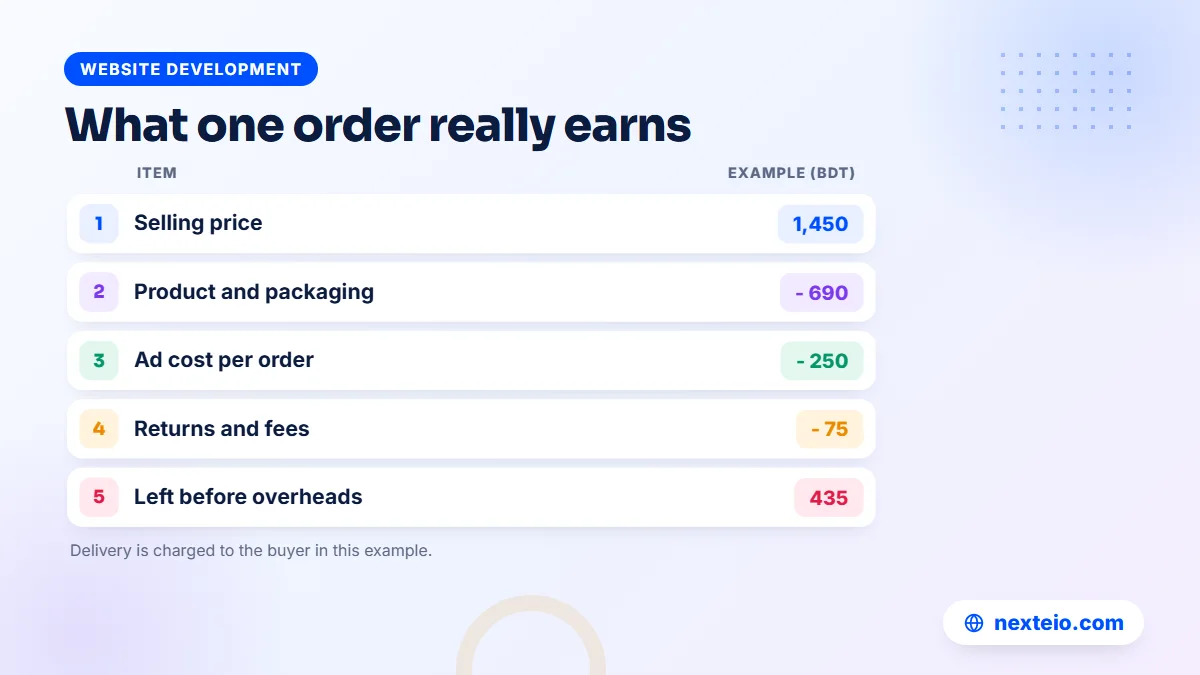
Here is a worked example for a cotton panjabi. Every figure is an assumption for illustration, so replace them with your own:
| Item | Per order (BDT) |
|---|---|
| Selling price | 1,450 |
| Product cost from supplier | 650 |
| Packaging and a thank-you card | 40 |
| Ad spend per confirmed order | 250 |
| Cost of returned parcels, spread over all orders | 60 |
| Payment or cash-collection fees | 15 |
| What is left before your time and overheads | 435 |
In this example, delivery is charged to the buyer separately. If you offer free delivery, take the delivery charge out of the 435 as well.
Now look at what moves that number. If ad cost per order rises from 250 to 450, the margin nearly halves. If one in five parcels comes back unpaid, return costs climb quickly, because you pay delivery both ways and the product may come back damaged. A small price rise, or a slightly larger order through bundles, can make a bigger difference than any cost cut.
Check three numbers every week: average order value, ad cost per confirmed order and return rate. If you know only these three, you already know more than many sellers running busy pages.
Paperwork and Rules for Starting an Online Business
Many small sellers start without paperwork and sort it out later. That can work for a short test, but it becomes a problem as soon as you want a merchant payment account, a bank account in the business name or larger supplier credit. Getting the basics in place early also makes the business look more serious to buyers and partners.
The usual starting points are:
- Trade license: issued by your local city corporation, municipality or union parishad, depending on where the business operates.
- e-TIN: a tax identification number from the National Board of Revenue, needed for many banking and business tasks.
- Business bank account: keeps business money separate from personal money and helps when you apply for merchant accounts.
- Digital Business Identity (DBID): a registration the Ministry of Commerce introduced for online businesses. Check the current requirements before you launch.
- Product-specific approvals: food, cosmetics, medicine and some electronics may need extra licenses or standards marks.
As the business grows, VAT registration and company registration may become relevant. An accountant can tell you when you cross those lines.
Online sellers also need to follow the government's Digital Commerce Operation Guidelines and consumer protection law. In plain terms: describe products honestly, deliver within the time you promise, refund properly when you cannot deliver, and do not take advance payment for products you do not have in stock. Government services and contact points are listed on the Bangladesh national portal. Rules change, so check the current position before you launch rather than relying on old posts in seller groups.
Payments: Cash on Delivery, bKash, Nagad and Cards
Most first-time buyers in Bangladesh prefer cash on delivery, especially from a page they have not bought from before. Accepting it is almost unavoidable when you are new. The cost is risk: some buyers refuse the parcel at the door, and you pay for delivery both ways.
Mobile financial services are the next step. bKash and Nagad both offer merchant accounts for businesses, which look more professional than a personal number and keep your records cleaner. Mobile financial services in Bangladesh are regulated by Bangladesh Bank, and each provider sets its own merchant terms and charges. You can find business account details on the Nagad website and through bKash's own channels.
A practical payment setup for a new online sales business looks like this:
- Cash on delivery for first orders, with a phone call to confirm before you ship.
- A small advance, such as the delivery charge, by mobile wallet for high-value items or for areas with many past refusals.
- Full advance payment for made-to-order and custom items, explained clearly before the order.
- Card and wallet payments through a payment gateway once you have a website and enough volume.
Whatever you choose, write the payment rules on your page and product posts. Surprises at the payment stage are a common reason buyers cancel.
Sourcing, Stock and Packaging
Your supplier is part of your brand, whether customers know their name or not. If the supplier sends a different shade, a weaker fabric or a late batch, your page takes the blame.
For reselling, start with two or three suppliers and compare samples, not just price lists. Ask about minimum order quantities, how they handle defects and how quickly they can restock a best seller. For own-brand products, visit the workshop or factory if you can, agree on a written specification and check the first batch piece by piece.
Keep stock simple at the start. A spreadsheet with product, size, color, quantity and cost is enough for the first few hundred orders. Update it every day, because selling an item you do not have is one of the fastest ways to lose a customer and break the guidelines on advance payments.
Packaging matters more than many sellers think. A parcel that arrives crushed, wet or loosely wrapped makes the buyer doubt the product inside. Use water-resistant outer bags in the rainy season, padding for anything fragile and a simple card with your page name and phone number. Repeat orders often start from that small card.
Where to Sell: Facebook Page, Marketplace or Your Own Website
Most online store business owners in Bangladesh use more than one channel. Each channel has a different role, and they work best together.
Facebook page and social media
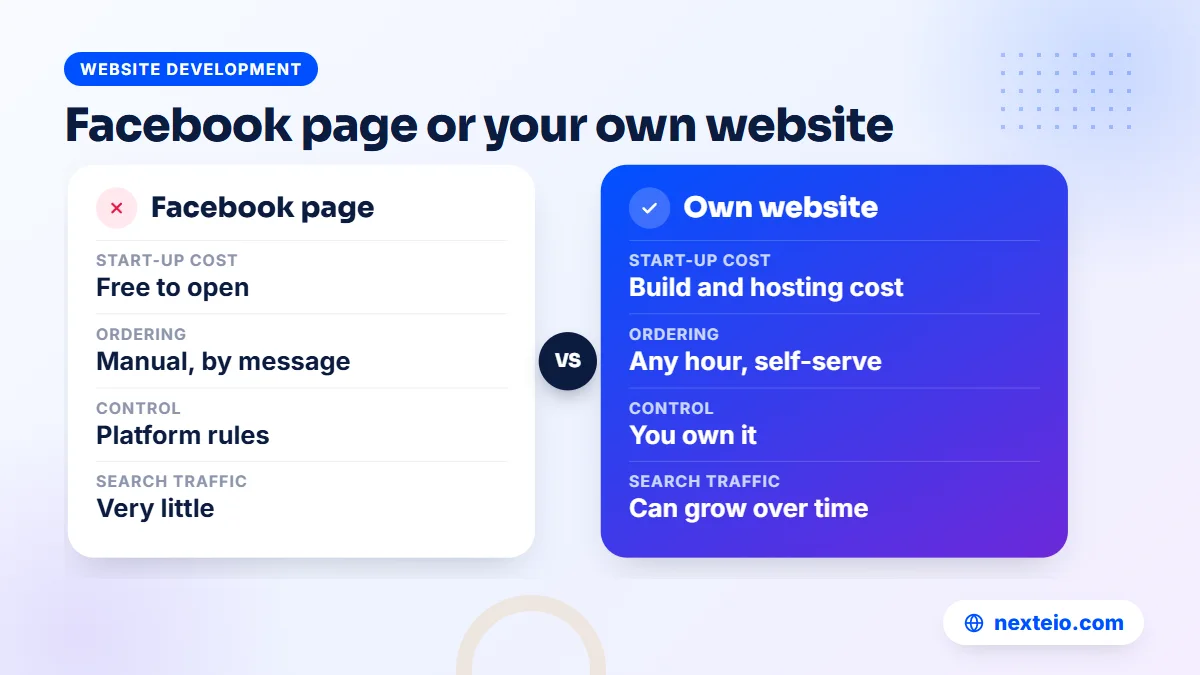
A Facebook page is the fastest start. It is free to open, buyers already use it, and you can talk to them directly through messages. The downside is control. Your reach depends on the platform's rules, your product posts disappear down the feed, and every order needs manual handling in the inbox. Instagram and TikTok work the same way and suit visual products and short videos.
Marketplaces
Large online marketplaces give you access to buyers who are already shopping. You pay a commission, follow the marketplace's rules and compete side by side with similar sellers, often on price. Marketplaces suit sellers who want volume without building their own traffic, but they rarely help you build your own brand or customer list.
Your own website
Your own store is the only channel you fully control. Buyers can browse every product, see prices and stock, read your policies and order at any hour without waiting for a reply. It also gives you customer data, proper tracking for ads and a chance to appear in Google search. The cost is the build and the work of bringing visitors.
For most new sellers, a sensible path is to start on a Facebook page, prove that the product sells, then add a website once you have steady orders. Our guide to planning an e-commerce website in Bangladesh explains what that build involves, and our e-commerce website development service handles it when you are ready.
Delivery, Order Confirmation and Returns
Delivery is where many online shopping business owners lose money without noticing. The fix is a clear routine that runs every day, not heroic effort when things go wrong.
Start with the courier. Compare at least two courier services on delivery charges inside and outside your city, cash-collection fees, how quickly they pay out collected cash, how they handle returns and how easy their merchant panel is to use. Many sellers use one courier for local deliveries and another for areas outside the city.
Then build an order routine:
- Record every order in one place with name, phone, full address and items.
- Call or message the buyer to confirm the order, the price and the delivery charge.
- Pack the order and attach the courier label the same day if possible.
- Send the buyer the tracking number or expected delivery date.
- Follow up after delivery to ask whether everything arrived as expected.
The confirmation call is the single best defence against returns. It catches wrong addresses, fake orders and buyers who have changed their mind before you pay for delivery.
Write a simple return and exchange policy and stick to it. For example: exchanges within three days for wrong size or a defect, with the item unused and in its original packing. A clear policy reduces arguments and, oddly, makes buyers more willing to order.
Getting Your First 100 Customers
Your first customers rarely come from one big campaign. They come from many small efforts done consistently. Here are the methods that work for most new online sellers in Bangladesh.
Content that shows the product. Short videos of the product in use, honest close-up photos and answers to common questions do more than polished banners. A ten-second clip showing how a bag opens, or how a dress moves, answers what a photo cannot.
Paid ads in small, focused tests. Facebook and Instagram ads remain the main paid channel for most new shops. Start small, aim at a specific buyer, and judge ads by confirmed orders, not likes. Our guide on targeting the right audience with Meta ads explains how to do this without wasting money. When you want help running campaigns, our Facebook ads service can take it on.
Short video platforms. TikTok and Reels can bring attention quickly for products with a visual hook. If you plan to advertise there, read our notes on what to expect from TikTok ads in Bangladesh, and consider our video ads editing service to turn raw phone clips into ads.
Search. Once you have a website, people searching on Google for your product type can find you without a cost per click. That takes time to build, but it lowers your dependence on ads. Google's free Business Profile also helps nearby customers find you if you have a shop or pickup point.
Repeat buyers and referrals. A happy first customer is your cheapest future sale. Ask for a review, offer a small thank-you on the next order, and keep their contact with permission so you can tell them about new stock.
Related guides for this stage:
- How small businesses can plan ad campaigns across platforms
- How to create a landing page that turns ad clicks into orders
- Simple SEO tips for small business websites in Bangladesh
Pick one or two channels and do them well before adding more.
A Budget for the First Three Months
The right budget depends on your product and model, but it helps to see the parts together. The table below shows a modest starting budget for a small reselling business. Treat the amounts as rough examples, and keep a cash reserve on top.
| Budget item | Example amount (BDT) | Notes |
|---|---|---|
| First stock | 30,000 to 80,000 | Keep it small and broad until you know what sells |
| Packaging and printing | 3,000 to 8,000 | Bags, boxes, labels and thank-you cards |
| Product photos and video | 2,000 to 15,000 | A phone, a light and a plain background can be enough at first |
| Ads for three months | 15,000 to 45,000 | Start with small tests, then scale what brings orders |
| Trade license and basic paperwork | Varies by area | Check local fees before you plan |
| Cash reserve | At least one month of costs | Courier payouts and slow weeks need a buffer |
A website is usually a later step, but it is worth knowing the costs early.
When you add a website, typical market ranges in Bangladesh for an e-commerce store are BDT 25,000 to 60,000 on a ready theme, BDT 60,000 to 150,000 for a custom design and BDT 150,000 or more for a custom-built store with integrations. On top of that, a .com domain is about BDT 1,500 to 2,500 a year and shared hosting about BDT 2,000 to 8,000 a year. A WordPress store with WooCommerce is the most common starting point for local sellers.
Do not spend your whole budget before the first order arrives. Money held back for ads and restocking a best seller is worth more than a perfect logo.
What to Track Every Week
Starting an online business without numbers is like driving at night without lights. You might be fine, but you will not see the problem until you hit it. A simple weekly review takes thirty minutes and keeps you honest.
Track these figures in a spreadsheet every week:
- Orders received, orders confirmed and orders delivered.
- Return or refusal rate, and the reasons buyers gave.
- Average order value.
- Ad spend and ad cost per confirmed order.
- Gross profit after product, packaging, delivery and returns.
- Best-selling products and products that have not moved in a month.
- Repeat buyers as a share of all orders.
Look for trends, not single days. One bad day means little. Three bad weeks in a row mean something has changed in your product, your ads or your delivery.
Once you have a website, add tracking for visits, add-to-cart and checkout steps. That shows where buyers drop off, which is the most useful information you can have when deciding what to fix first.
Mistakes That Sink New Online Businesses
Most failed online shops do not fail on day one. They fade over a few months because of mistakes that were easy to avoid. Watch for these.
Selling below real cost. Pricing to match the cheapest page without counting ad spend and returns. You get orders and lose money on each one.
Too much stock too early. Buying many designs before you know which sell. Cash sits on shelves while the page needs ads.
Mixing personal and business money. Without separate accounts, you cannot tell whether the business is earning or eating your savings.
Skipping order confirmation. Shipping every order without a call leads to high refusal rates and wasted delivery charges.
Slow replies. A buyer who waits hours for a price reply often buys from the next page instead. Set reply times and use saved answers for common questions.
Copying other pages. Using someone else's photos or product videos damages trust and can get posts removed. Take your own photos, even simple ones.
Depending on one channel. If your whole online business lives on one page and that page has a problem, sales stop overnight. A website and a customer list give you a backup.
A 90-Day Plan for Starting an Online Business
Ninety days is long enough to test, learn and decide whether to grow, without betting everything on a guess. Here is one way to split the time:
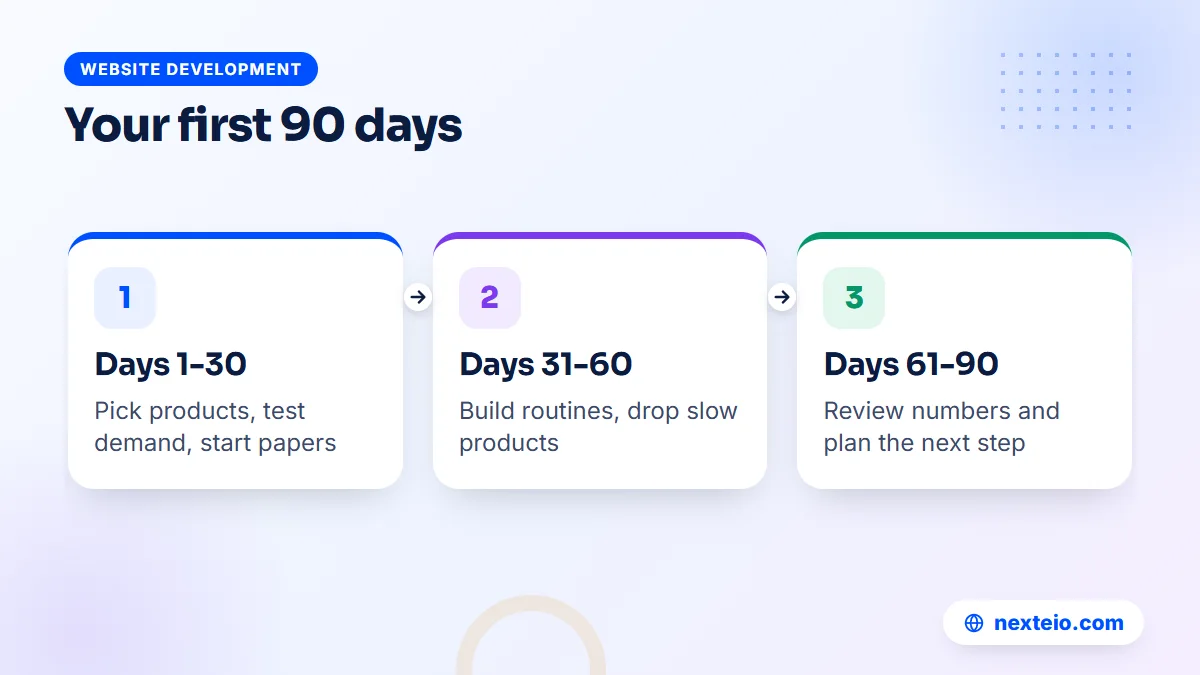
Days 1 to 30: prepare and test. Choose your model and two or three products. Set up your page, take photos, find a courier and work out your numbers per order. Start the paperwork. Run a small demand test and deliver the first orders yourself if you can, so you see every problem first-hand.
Days 31 to 60: build the routine. Write your return policy, set up order confirmation and stock records, and drop the products that did not sell. Increase ad spend slowly on the products that did, and start collecting reviews and repeat buyers.
Days 61 to 90: decide and plan the next step. Review your weekly numbers. If orders are steady and each one earns money, plan the next stage: a wider range, own-brand products or a website. If not, change the product or the audience, not just the ad.
For many sellers, the end of this period is the right time to plan a proper store. Our notes on how SEO brings in customers and Google's own SEO starter guide show why a website you control becomes more valuable over time.
How Nexteio Can Help You Start Selling Online
Starting an online business takes more than a website, and we do not pretend otherwise. Where we help is the part that turns a page with orders into a business people can buy from at any hour. Through our e-commerce website development service, we plan and build online stores for sellers across Bangladesh, set up around how buyers here actually pay: cash on delivery, mobile wallets and cards.
We start by looking at your products, order volume and budget, then recommend the simplest store that fits. For many new sellers that is a WooCommerce store built for local buyers, with clear product pages, delivery charges, order notifications and the store, domain and hosting in your name. When you are ready to bring traffic, we can also help with e-commerce SEO, ads and short product videos.
You can read more about Nexteio, see examples in our portfolio or reach us through the contact page. If you already have a page with steady orders, tell us about your business on the project form, and we will suggest the right next step for your online store. If you are still testing products, send a short note anyway, and we will tell you honestly whether a website makes sense yet.
Keep reading: Meta ads tips for better results in Bangladesh, what Google Ads costs a small business in Bangladesh, or browse all our website development guides.
Frequently asked questions
How much money do I need to start an online business in Bangladesh?
It depends on the model. A made-to-order or service business can start with very little, while reselling products usually needs money for a first batch of stock, packaging, photos and a few months of small ad tests. Many sellers begin with a modest amount, keep a cash reserve and only add a website once orders are steady.
Do I need a trade license to sell on Facebook?
Many small sellers start without one, but a trade license is the basic legal document for running a business, and you will need it for things like a business bank account and many merchant payment accounts. Getting it early also makes the business look more trustworthy. Check the current rules for online sellers, including DBID registration, before you grow.
Is cash on delivery a good idea for a new online shop?
For most new shops it is close to essential, because first-time buyers do not yet trust a page they have never ordered from. The risk is refused parcels, which cost you delivery both ways. Confirm every order by phone before shipping, and consider asking for a small advance on high-value or custom items.
Should I start with a Facebook page or a website?
Most sellers start with a Facebook page because it is free and quick, and it lets you test products with real buyers. A website becomes worth it once you have steady orders, a growing product range or a need for proper tracking and search traffic. Many successful sellers run both, with the page bringing attention and the website taking orders.
What products are easiest to sell online for a beginner?
Light, hard-to-break products with a clear buyer and a price high enough to cover delivery and ad costs are the easiest to start with. Clothing, accessories, home items and simple gadgets are common examples. Avoid categories that need special licenses, such as medicine, until you understand the rules.
How long does it take for an online business to become profitable?
There is no fixed timeline. Some sellers earn a small profit per order from the first month, while others spend several months testing products before finding one that works. Tracking your profit per order, return rate and ad cost each week shows you early if the business is moving in the right direction.
Can I run an online business alongside a full-time job?
Yes, many people start that way, especially with made-to-order products or a small reselling range. The hard parts are replying to messages quickly and handling daily packing and courier pickups. Saved replies, fixed dispatch times and help from a family member or part-time assistant make it manageable.