Shopify Website Examples: Well-Designed Stores Across Industries
In this article 17 sections
- 1.How to Study Shopify Website Examples Without Copying Them
- 2.How to Tell Whether a Store Runs on Shopify
- 3.Fashion and Apparel: Shopify Website Examples
- 4.Footwear: Selling Comfort Through a Screen
- 5.Beauty and Personal Care Shopify Sites
- 6.Food and Drink Store Examples
- 7.Home, Furniture and Bedding Examples
- 8.Wellness and Values-Led Shopify Store Examples
- 9.Menus and Collection Pages in Large Stores
- 10.What the Best Shopify Website Examples Have in Common
- 11.Shopify Site Examples: Product Page Lessons Side by Side
- 12.Theme Demo Stores: Examples at a Small-Business Budget
- 13.Turn Shopify Website Examples Into Your Own Design Brief
- 14.Adapting These Examples for Stores in Bangladesh
- 15.Mistakes People Make When Copying Shopify Sites
- 16.How Nexteio Can Help Build Your Store
- 17.Frequently asked questions
Shopify website examples are one of the fastest ways to plan your own store. Looking at well-built stores shows you what good product pages, menus and homepages look like in practice, long before you pay anyone to design yours. The trick is knowing what to look for, and which lessons fit a business selling in Bangladesh rather than a large brand selling across the world.
Most famous Shopify stores are run by big brands with large teams, professional photographers and custom-built themes. You do not need their budget to learn from them. Many of their best ideas are simple: a clear size guide, honest product photos, a short line about delivery, a product page that answers questions before anyone asks.
This guide groups real stores by industry, explains what each one does well, and shows how to turn those observations into a design brief for your own store. It also covers how to check whether a site runs on Shopify, what theme demo stores can teach you, and which ideas need adapting for cash on delivery, mobile data and Bangla content.
Every store named here was running on Shopify when this guide was written. Brands can change platforms and redesign at any time, so treat these as places to study, not fixed references.
How to Study Shopify Website Examples Without Copying Them
Browsing other stores is useful only if you look with a purpose. Scrolling through twenty beautiful homepages tends to leave you with a vague feeling and no decisions. A better approach is to study a few stores closely, one page type at a time, and write down what you would use.
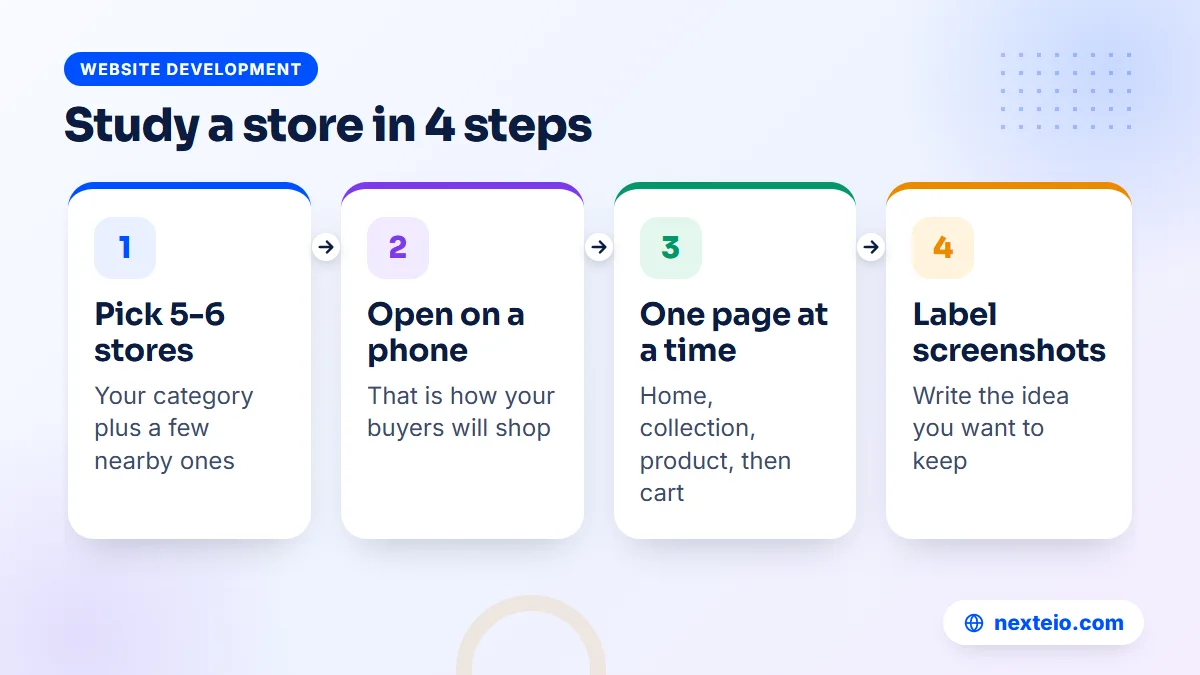
A simple method that works well:
- Pick five or six stores: two in your own category, two in a nearby category and one or two known for clean design.
- Open each store on your phone first, because that is how most of your buyers will see your store.
- Study one page type at a time across all stores: homepage, then collection page, then product page, then cart.
- For each page, note what you see in the first screen, how the store explains the product and how many taps it takes to add to cart.
- Take screenshots and label each one with the idea you want to keep, not just "nice".
Five Shopify website examples studied this way will teach you more than fifty skimmed in an evening.
Then draw a line between learning and copying. Layout ideas, page structure and the kind of information a store shows are fair to learn from. Product photos, written descriptions, logos, brand names and distinctive graphics belong to their owners. Copying them can get your store reported, your ads rejected and your brand dismissed as a fake.
How to Tell Whether a Store Runs on Shopify
When you find a store you like, it helps to know which platform it uses. If it runs on Shopify, you know its features are possible on your store too, though some may need a paid theme, an app or custom work. A few simple checks usually tell you:
- The page source: open the site on a computer, view the page source and search for "Shopify" or "cdn/shop". Shopify stores load many files from those paths.
- The URL pattern: Shopify product pages usually sit under /products/ and category pages under /collections/.
- The cart and checkout: the checkout page on Shopify stores has a familiar, clean layout, with the store's logo and colors on top.
- Browser extensions: several free extensions show the platform and theme a site uses, though they are not always right.
None of these is perfect on its own, so use two together. Shopify also keeps its own gallery of Shopify store examples, which is a good place to find more stores to study after this guide.
Fashion and Apparel: Shopify Website Examples
Clothing is one of the most common categories on Shopify and the most relevant one for many sellers in Bangladesh. Fashion stores have to solve the same problems everywhere: size, fit, color and fabric, all judged through a phone screen.
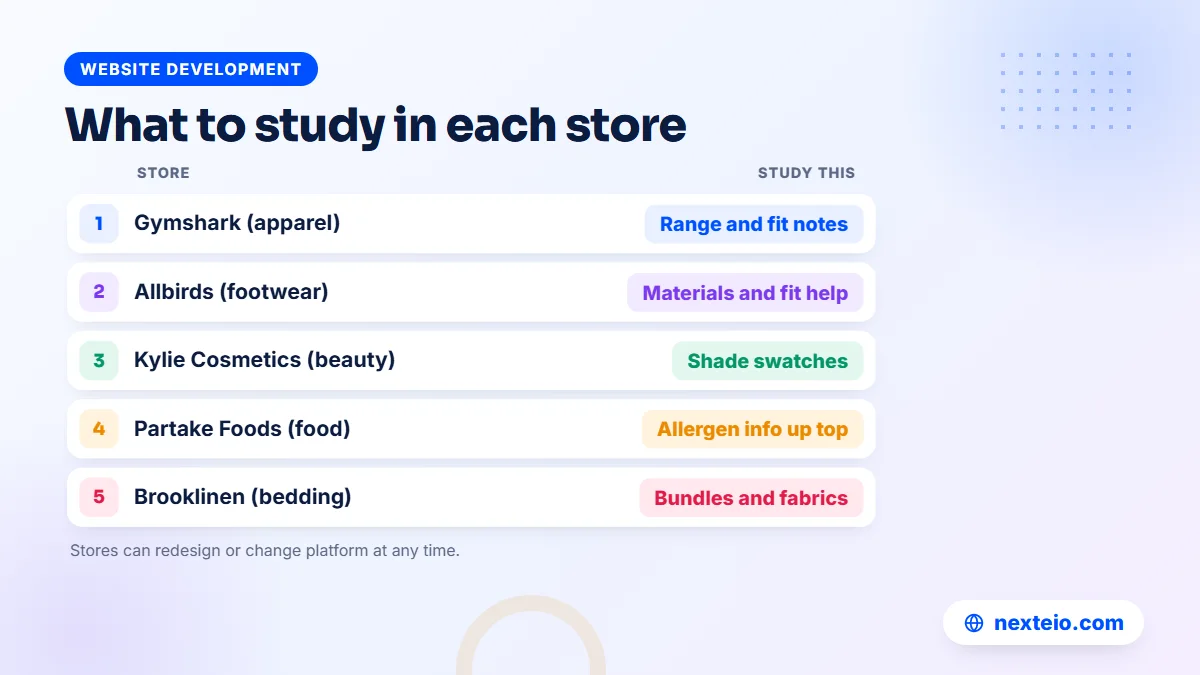
Gymshark
This brand sells fitness clothing and is one of the best-known Shopify sites in the world. It is a good store to study for organizing a large range: men's and women's clothing are kept apart, then broken down by product type, so a buyer reaches the right shelf in a few taps. Look closely at how its product pages use photos and fit notes to help buyers judge size and stretch.
Taylor Stitch and Chubbies
These two menswear brands show how much the written voice can carry. Taylor Stitch talks about fabric, construction and clothing made to last, and is a useful example of product pages that explain materials. Chubbies, which built its name on shorts, uses a playful, joking tone throughout. Both prove that a clear voice makes a store memorable, even when the products themselves are simple.
What a fashion seller in Bangladesh can take from them
- Show the same item on more than one body type, or at least give the model's height and size worn.
- Use color swatches, not a dropdown, so buyers see every shade at once.
- Put a size chart in centimeters and inches one tap from the size buttons.
- Write fabric, thickness and care in plain words, since buyers cannot touch the cloth.
- Choose a voice and keep it on every page, from product titles to the delivery policy.
A kurti, saree or panjabi brand can apply all of this with a modest budget. The photos matter far more than the theme.
Footwear: Selling Comfort Through a Screen
Shoes are hard to sell online because comfort and fit are physical. The best footwear stores on Shopify work hard to answer "will this fit me?" before the buyer has to ask.
Allbirds built its brand around materials, and its store shows it. Study how its product pages explain what each shoe is made from and why, in short sections rather than long blocks of text. Look for its fit guidance too, because fit is the biggest fear in buying shoes online.
Rothy's sells washable shoes and bags, and makes that practical benefit part of its pitch. Manitobah, a footwear brand known for mukluks and moccasins, is worth a look for how brand story and craft can sit alongside the product, a reminder that heritage can sell as strongly as features.
For a leather goods or shoe maker in Bangladesh, the lesson is to make fit help impossible to miss. Add a clear size guide with foot length in centimeters, note whether a style runs small or large, and explain your exchange rule for wrong sizes right beside the size buttons. That single block can prevent many returned parcels.
Beauty and Personal Care Shopify Sites
Beauty products sell on trust and on showing results honestly. Buyers want to see color, texture and how a product fits into a routine.
Kylie Cosmetics is a well-known example of a celebrity-led beauty brand on Shopify. Study how its product pages use shade swatches and close-up images, so buyers can compare colors side by side. Beardbrand sells men's grooming products and supports them with guides and how-to content, which turns the store into a place to learn as well as buy.
The lessons for a beauty or skincare seller here are practical:
- Show every shade on more than one skin tone, using your own photos taken in natural light.
- List full ingredients and the size or weight of each product clearly.
- Group products into simple routines or bundles, such as a morning skincare set.
- Add a short "how to use" section to every product page.
Be careful with claims. Words like "whitening", "cure" or guaranteed results can break advertising rules and mislead buyers. Describe what the product does in honest, specific terms.
Food and Drink Store Examples
Food stores have to make people hungry through a screen while also answering practical questions about freshness, ingredients and delivery. That balance is hard, and the good examples handle it well.
Death Wish Coffee sells strong coffee with a bold, dark brand that is unmistakable from the first screen. The store makes repeat buying easy through subscriptions, which suits a product people use every day. Partake Foods makes allergy-friendly snacks and puts allergen information front and center, because that is the first thing its buyers check.
A home bakery, a spice brand or a packaged snacks business in Bangladesh can borrow both ideas. Make the one thing your buyers worry about most impossible to miss, whether that is freshness, ingredients, halal status or delivery time. If customers reorder often, make reordering simple, even if that just means a "buy again" link in the order confirmation message.
Food also needs clear delivery rules. State which areas you deliver to, how long items stay fresh and whether you deliver on the same day. For cakes and fresh items, a delivery-date note on the product page avoids many disappointed buyers.
Home, Furniture and Bedding Examples
Home products are often expensive, bulky and bought less often, so buyers need more reassurance before they order. The strongest Shopify sites in this category explain the product carefully and remove doubts about delivery and returns.
Brooklinen sells bedding and makes choosing simple with bundles and clear explanations of fabric types. Ruggable sells washable rugs, and its store explains how the product system works, which matters when the main selling point is something buyers have not seen before. The Sill sells indoor plants with care information alongside each product, so buyers know what they are taking on. Mattress and furniture brands such as Leesa and Koala are worth studying for how they present delivery, trial and comfort details, because those are the questions that stop a large purchase.
For a furniture maker or home décor shop in Bangladesh, the lesson is to answer the big-ticket worries directly. Show real dimensions, materials and room photos. Explain delivery charges for large items, whether assembly is included and what happens if an item arrives damaged. Buyers spending BDT 30,000 on a sofa will read every word of that.
Wellness and Values-Led Shopify Store Examples
Some brands sell as much on what they stand for as on the product itself. These stores are useful examples of how to explain values without hiding the product.
Ritual, a vitamin brand, puts ingredient sourcing and transparency at the center of its store. Package Free sells products aimed at reducing everyday waste, a mission that shapes how the whole store is presented. The clothing brand tentree ties its products to tree planting and makes that commitment part of its brand.
The useful lesson for a Bangladeshi brand selling handloom fabric, jute products or organic food is to show the evidence, not just the slogan. Photos of the weavers or the farm, details of where materials come from and specific facts about the process are more convincing than words like "eco-friendly" on a banner. Only make claims you can back up.
Related guides that help at this stage:
- Planning content for every stage of the customer journey
- Writing website content that people actually read
- What a business video editing service should include
Good stores are built on content as much as on design, so plan the words and videos early.
Menus and Collection Pages in Large Stores
Large stores carry hundreds or thousands of products, yet the good ones still feel easy to browse. Of all the Shopify website examples in this guide, the big fashion and home stores are the most useful to study for this, because they have had to solve the problem at scale.
Watch how their menus change between desktop and phone. On a computer, a wide menu may show images and several columns. On a phone, the same menu collapses into a short list that opens one level at a time. Main categories tend to be few and named in the words buyers use, not internal product codes.
Collection pages follow a similar logic. Filters cover the attributes people actually choose by, such as size, color, price and availability. Sorting by best sellers is common, which quietly pushes proven products to the top. Many collections also open with a short line of text explaining what is inside.
For a store in Bangladesh, think about how your buyers search for products. Many shop by occasion as much as by type, so collections such as Eid, wedding season, winter or office wear can work better than a plain list of product types. Avoid creating collections with only two or three products. A thin collection looks empty and makes the whole store feel smaller than it is.
What the Best Shopify Website Examples Have in Common
Look across all these industries and the same patterns appear again and again. None of them depends on a large budget. They depend on decisions.
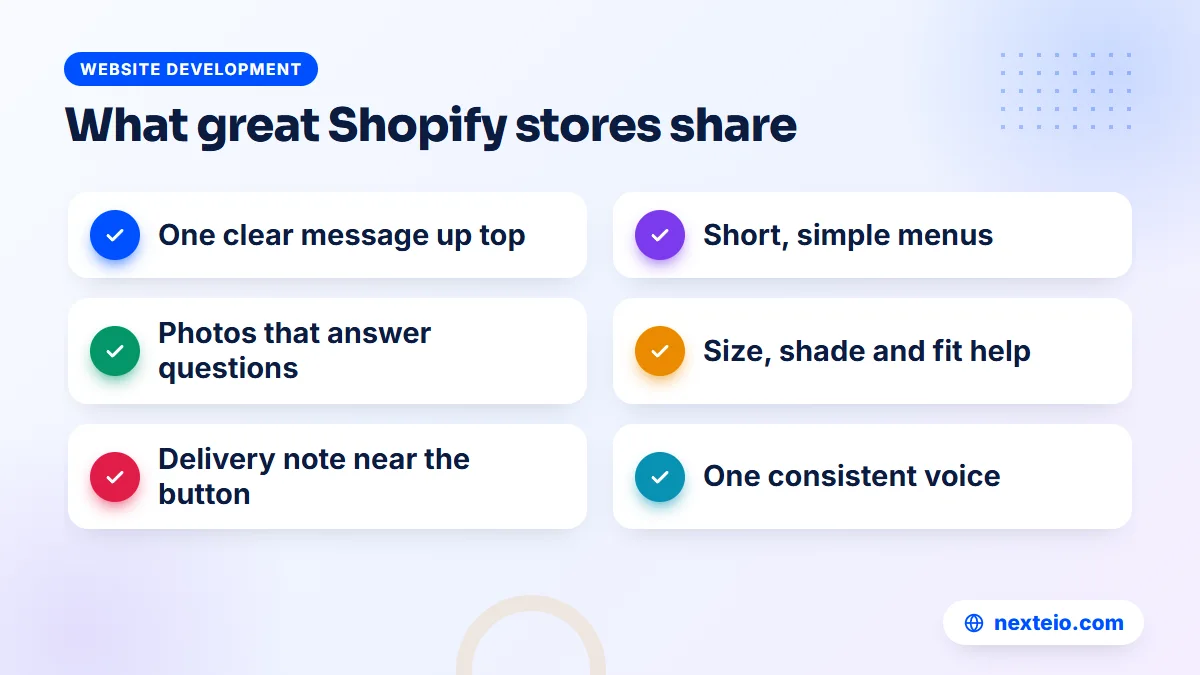
| Pattern | What it looks like | Why it works |
|---|---|---|
| One clear message up top | One image, one line, one button on the first screen | Visitors know where they are within seconds |
| Simple menus | Five to seven main categories, grouped the way buyers think | Buyers reach the right shelf in fewer taps |
| Product photos that answer questions | Close-ups, scale, product in use, several angles | Replaces touching the product in a shop |
| Fit and detail help | Size guides, swatches, ingredients, dimensions | Fewer wrong orders and returns |
| Delivery and returns in plain sight | A short note near the add-to-cart button | Removes the last doubt before ordering |
| A consistent voice | The same tone from headlines to policies | Makes the brand memorable and trusted |
Notice what is rarely on the list: animations, sliders and clever effects. The best stores feel calm and fast.
Speed is part of that calm feeling. Large brands invest heavily in keeping their stores fast, and you can check any store, including your own, with Google's PageSpeed Insights. Our guide on website speed and SEO explains why fast pages bring both more sales and better search rankings.
Shopify Site Examples: Product Page Lessons Side by Side
Product pages are where most of the lessons in this guide come together. If you line up a product page from each store above on your phone, a broadly similar structure tends to appear, even though the brands look nothing alike. These Shopify site examples sell shoes, coffee, rugs and vitamins, yet most product pages follow roughly this order:
- Top: product name, price and a one-line benefit, plus a star rating where the store has genuine reviews.
- Gallery: several photos and often a short video, starting with the clearest view of the product.
- Options: swatches or size buttons, with the size or fit guide linked right beside them.
- Action: a large add-to-cart button, with delivery and returns noted just below it.
- Details: materials, ingredients, care and dimensions in short collapsible sections.
- Further down: reviews, then related products or bundles.
This order works because it follows the buyer's questions: what is it, what does it look like, will it suit me, how do I get it, and what do others think.
A store selling in Bangladesh needs two extra lines that foreign examples usually skip: whether cash on delivery is available and how long delivery takes inside and outside your main area. Put both near the button, not inside a tab that few people open.
Reviews deserve a warning. Large stores show many reviews because they have many customers. Never fill your store with invented reviews to look established. Start with a few genuine ones from early buyers, with their permission, and let the number grow honestly.
Theme Demo Stores: Examples at a Small-Business Budget
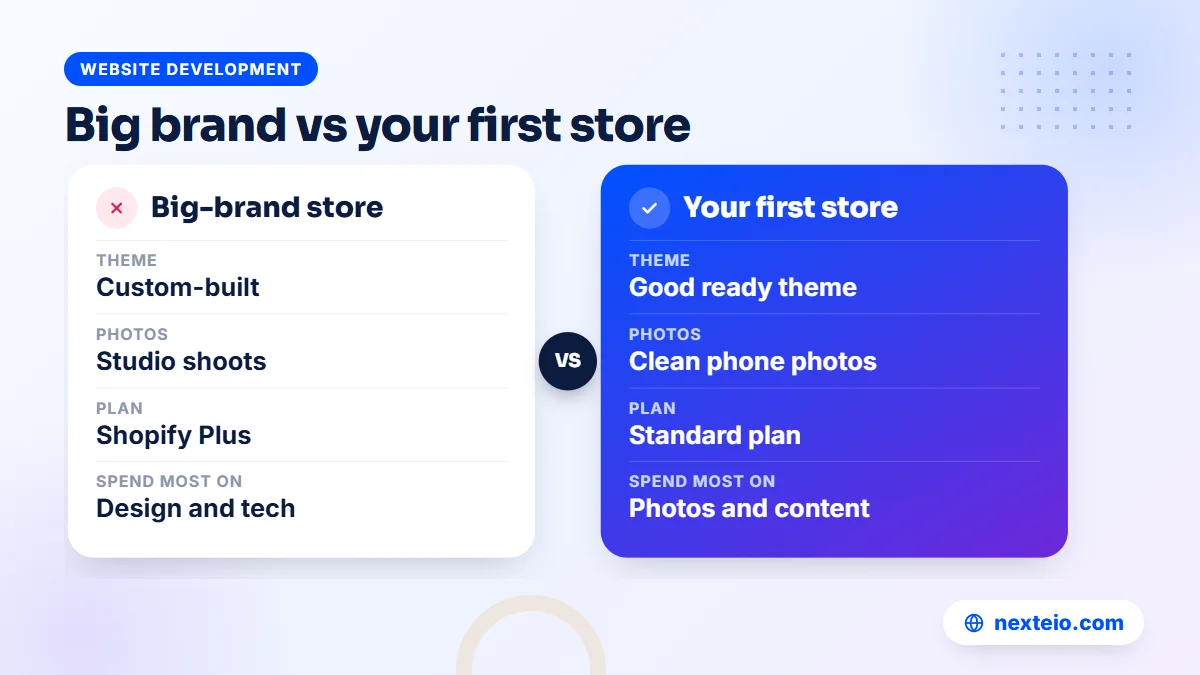
Large brands like these often use custom-built themes and Shopify's plan for bigger businesses, Shopify Plus. That is not where most new stores should start. A more realistic set of examples sits in the Shopify Theme Store, where every theme has one or more demo stores filled with sample products.
Theme demos are useful Shopify website examples because they show exactly what you can get without custom code. The demo of Dawn, Shopify's well-known free theme, is a good baseline: clean, fast and simple. Paid themes show more specialized layouts for large catalogs, single-product brands, food stores or fashion lookbooks.
When you study demo stores, remember they use professional photos and perfect sample content. Picture each layout with your own photos and real product names, some of them long. A layout that depends on huge lifestyle images may look empty with plain product shots on white.
It also helps to compare a demo with a real store built on the same theme. If you spot a live store using a theme you like, look at it with real products and ordinary photos. That shows you what the theme looks like in everyday use.
Turn Shopify Website Examples Into Your Own Design Brief
Studying stores is only useful if it ends in decisions. A short design brief turns your notes into instructions a designer, or you, can follow. It also stops the project drifting toward whatever store someone saw most recently.
A good brief covers these points:
- Your buyer: who they are, what they worry about and which device they use.
- Your top three examples: with a note on exactly what you like in each, such as "Brooklinen's bundle layout" or "Gymshark's model size notes".
- Page by page needs: what the homepage, collection page and product page must show.
- Must-have features: swatches, size chart, delivery-date note, reviews, Bangla text and so on.
- Things to avoid: sliders, pop-ups on entry or any style you dislike.
- Brand basics: logo, colors, fonts and the tone of voice you want.
- Content you have: how many products, how many photos, and who writes descriptions.
Keep the whole brief to one or two pages. Short briefs get read.
With a brief like this, a designer can quote accurately and you can judge the first draft against agreed points rather than taste. Our buyer's checklist for choosing a web design company shows how to use a brief when comparing providers. A brief like this is also the best way to start a conversation with our e-commerce website service, because it lets us quote for the store you actually want.
Adapting These Examples for Stores in Bangladesh
Most of the stores above sell in markets where card payment is normal and delivery is predictable. Buyers in Bangladesh shop in a different setting, and a direct copy of a foreign store can miss what local buyers need most.
Adjust the Shopify website examples in these ways:
- Payment: make cash on delivery and mobile wallet options clear on product pages, not only at checkout.
- Delivery: show delivery time and charges for inside and outside your main area near the add-to-cart button.
- Contact: show a phone or WhatsApp number, since many buyers want to ask before ordering.
- Speed: keep pages light for mobile data, with compressed images and fewer apps.
- Language: decide on English, Bangla or both, and test Bangla text with your theme's fonts.
- Trust: add a real business address, clear policies and genuine reviews from local buyers.
These local details often matter more than any design choice copied from a global brand.
Also be realistic about platform choice. Shopify suits many stores, but monthly fees are billed in US dollars, and payment options for local stores depend on third-party gateways. For some businesses, a WooCommerce store or a custom build fits better. Our comparison of WordPress and custom websites and our WordPress website service cover the alternatives.
As for budgets, typical market ranges in Bangladesh for an e-commerce store are BDT 25,000 to 60,000 on a ready theme, BDT 60,000 to 150,000 for a custom design and BDT 150,000 or more for a custom-built store with integrations. A store inspired by the examples in this guide, built on a good theme with strong photos, often sits in the first or second range. Our notes on planning and budgeting an e-commerce website break those costs down further, and our online store development team can price a store from your own brief.
Mistakes People Make When Copying Shopify Sites
Inspiration goes wrong in predictable ways. These are the most common traps when owners and designers work from Shopify website examples.
Copying the look, not the reason. A big brand's minimal homepage works because millions already know the brand. A new store with the same empty layout just looks unfinished. Copy the reasoning behind a choice, not the surface.
Using their photos as placeholders. Temporary images borrowed from another store have a habit of staying live. Use your own photos from the start, even simple ones.
Mixing too many examples. A homepage from one store, product pages from another and colors from a third rarely fit together. Pick one main reference for structure and borrow only small ideas from others.
Ignoring the phone. Many owners study examples on a laptop, then approve a design that is cramped on a phone. Study every example on a phone first.
Forgetting the content work. Great examples look great because of their photos, videos and writing. If you have five blurry photos per product, no theme will make the store look like Allbirds. Plan time and budget for content alongside design. Our video editing service can help turn raw phone footage into short product clips.
Paying for features you saw but do not need. Quizzes, 3D viewers and complex filters look impressive on large stores. A store with thirty products rarely needs them.
How Nexteio Can Help Build Your Store
We build online stores for businesses across Bangladesh through our e-commerce website development service. If you have collected Shopify website examples you like, bring them to us. We go through them with you, separate the ideas that suit your products and buyers from the ones that only work for large brands, and turn the rest into a clear design brief.
From there, we recommend the right platform for your store, whether that is Shopify, WooCommerce or a custom build, and design the homepage, collection and product pages around how your buyers pay and receive orders. For brand-led projects that need a unique look, our custom website design work covers that too. After launch, we can help bring traffic through e-commerce SEO and Facebook ads.
You can see stores and sites we have built in our portfolio or browse all our services. When you are ready, share your examples and store details on our project form, or reach us through the contact page. We will reply with a plan for your online store and a clear quote. If you are not sure where to begin, start with a short brief and we will help you shape it.
Keep reading: how to create a landing page that turns ad clicks into orders, how to build a professional business website, or browse all our website development guides.
Frequently asked questions
Where can I find more Shopify website examples?
Shopify keeps its own gallery of example stores on its website, and every theme in the Shopify Theme Store has demo stores you can browse. You can also check stores you already shop from by viewing their page source or URL pattern. Collect examples from your own category and from nearby ones, since good ideas often cross over.
Can I make my store look like a famous Shopify brand?
You can borrow layout ideas, page structure and the type of information they show, but not their photos, text, logos or distinctive graphics. Keep in mind that big brands often use custom themes and professional photo shoots. A good ready theme with clean photos of your own products will get you much closer than trying to copy their exact look.
Do the stores in these examples use free Shopify themes?
Many large brands use custom-built themes made by their own teams or agencies. That is why theme demo stores are often more useful examples for a new business, because they show what you can get from a free or paid theme without custom development. Shopify's free themes are a solid starting point for many small stores.
How can I check which theme a Shopify store uses?
Viewing the page source and searching for the word theme often shows the theme name, and some browser extensions detect it automatically. Many large stores use custom themes, so the name may not match anything in the Theme Store. Treat the result as a hint rather than a certainty.
Are there Shopify stores from Bangladesh I can study?
Some Bangladeshi brands use Shopify, especially those selling to buyers abroad, while many local stores use WooCommerce or custom platforms. Use the checks in this guide to find out what a local store you admire is built on. Whatever the platform, the lessons about photos, delivery information and payment clarity apply equally.
What matters more, the theme or the content?
Content usually matters more. A simple theme with clear photos, honest descriptions, size help and visible delivery information will outsell a fancy theme filled with weak content. Choose a solid theme, then put most of your time and budget into photos, product writing and short videos.
How many example stores should I study before designing my store?
Five or six stores studied closely is usually enough. Pick a couple from your own category, a couple from nearby categories and one known for clean design. Studying a few in depth, page by page and on a phone, gives you clearer decisions than browsing dozens quickly.