How to Start a Blog: A Practical Guide for Beginners and Businesses
In this article 16 sections
- 1.Decide Why You Want to Start a Blog
- 2.Pick a Topic You Can Write About for Two Years
- 3.Choose a Name and a Domain
- 4.Choose Where to Create a Blog
- 5.How to Start a Blog Step by Step
- 6.Create the Pages Every Blog Needs
- 7.Plan Your First Ten Posts
- 8.How to Write Posts People Finish Reading
- 9.Basic SEO So Google Can Find Your Posts
- 10.Promote Your Blog Without Spamming People
- 11.When and How a Blog Can Earn Money
- 12.How to Start a Blog for a Business, School or Organization
- 13.A 90-Day Plan to Start Blogging
- 14.Mistakes That Make New Bloggers Quit
- 15.How Nexteio Can Help You Start a Blog
- 16.Frequently asked questions
You can start a blog in Bangladesh in an afternoon, for free or for the cost of a domain name. The setup is the easy part. What decides whether the blog is still alive a year later is the planning before you publish and the habits you build in the first three months.
Most new blogs stop after six or seven posts. The writer runs out of ideas, the traffic is slower than expected, or the platform turns out to be wrong for what they wanted. None of these problems is about writing talent. They come from skipping a few decisions at the start.
This guide follows the order that works in practice: purpose, topic, name, platform, setup, the pages every blog needs, your first posts, basic SEO, promotion and earning. There is a separate section for companies, schools and organizations, and a 90-day plan you can follow week by week.
Decide Why You Want to Start a Blog
Before you choose a name or a theme, write one sentence about why the blog exists. The reason changes almost every later choice, from the platform to how often you post and how you measure success.
Most blogs fall into one of three groups:
- Personal or hobby blogs: travel notes, recipes, cricket, books, tech tips. Success means enjoying it and building a group of regular readers.
- Income blogs: blogs built to earn from Google AdSense, affiliate links or sponsored posts. Success means steady search traffic on topics that advertisers value.
- Business and organization blogs: a coaching center sharing exam tips, a software firm explaining its products, a clinic answering common patient questions, a garment exporter writing for foreign buyers. Success means inquiries, admissions or trust.
Be honest about which one you are building. A hobby blog can stay casual. An income blog needs patience and a lot of useful posts before it earns. A business blog needs to sit on the business website and lead readers toward a service. Trying to be all three at once usually produces a blog that does none of them well.
Pick a Topic You Can Write About for Two Years
The best topic is one you know well, care about and can keep writing on long after the first burst of energy fades. A simple test works better than any niche research tool: sit down and list thirty post titles. If you struggle to reach fifteen, the topic is too narrow or not one you know well enough.
Then check three things about the topic:
- Are people looking for it? Type a few of your post ideas into Google and look at the suggestions and the "People also ask" box. Real questions mean real readers.
- Can you add something others have not? Your own experience, local prices, photos you took or tests you ran. A blog that repeats what larger sites already say has little reason to exist.
- Is it a topic where trust matters a lot? Health, money and legal topics need real expertise and careful sources. Writing about them casually can mislead readers and hurt your blog in search.
If a topic passes all three checks and you still have thirty titles on your list, you have something worth building.
Bangla, English or both
Language is part of the topic decision. Bangla posts face less competition for many local searches, and they reach readers who are more comfortable in Bangla. English posts reach a wider audience but compete with sites from around the world. If you write in both, keep them as separate posts rather than mixing two languages in one article, and type Bangla in Unicode so everyone can read it.
Choose a Name and a Domain
Your blog's name will appear on every post, social page and business card, so choose it carefully. Good names are short, easy to spell after hearing them once, and broad enough to allow the blog to grow. Avoid a name tied to one tiny topic, such as a single phone model, because it becomes a problem the day you want to write about anything else.
A few practical rules help:
- Avoid hyphens, numbers and spellings that could be typed two ways.
- Check that the same name is free on Facebook, YouTube and other platforms you plan to use.
- Say it out loud to a friend and ask them to type it. If they get it wrong, so will readers.
- Make sure it does not copy a known brand or another blog's name.
Buy your own domain if you can, even if the platform offers a free address. A .com domain usually costs around BDT 1,500 to 2,500 a year, depending on the registrar. Organizations that want a local address can register a .com.bd or .bd domain through BTCL, which takes more paperwork. Whatever you choose, register the domain in your own name with an email address you control, not in a friend's or developer's account.
Choose Where to Create a Blog
Where you create a blog matters less than people think, as long as it suits your goal and lets you use your own domain. For most people in Bangladesh, the real choice is between Blogger and self-hosted WordPress.
| Your situation | Usually the right choice | Main reason |
|---|---|---|
| Personal blog with no budget | Blogger | Free hosting, nothing to maintain |
| Income blog aimed at AdSense | Blogger with a custom domain, or WordPress | Low cost and full control over ads |
| Blog for a company or institution | WordPress, on the main website | Posts support the whole site and lead to inquiries |
| Blog you expect to grow into a full site | WordPress | Easy to add pages, forms or a shop later |
Blogger is run by Google and costs nothing, and it has AdSense built in. WordPress needs paid hosting and regular updates, but it can grow into almost any kind of website. If you are torn between the two, start where you can publish this week. A good blog on a simple platform beats a perfect setup that never launches.
If you want Blogger set up cleanly with your own domain, a phone-friendly theme and the right search settings, our Blogger website service handles that. If the blog belongs to a business site, our WordPress website service builds the blog into your main website so the two work together.
How to Start a Blog Step by Step
Once the purpose, topic, name and platform are decided, the technical setup is quick. Here is the order for a Blogger blog, which is the most common free route.
- Create the blog. Sign in to Blogger with a Google account, choose a title and a blogspot address, and pick a theme. Google's own guide to creating a blog walks through each screen.
- Connect your domain. In Blogger's settings, add your custom domain, then add the DNS records Blogger gives you at your domain registrar. Turn on HTTPS once the domain is connected.
Then make the blog ready for readers:
- Set the basics. Write a clear blog description, turn on the search description option, set your time zone to Bangladesh and choose how comments are handled.
- Clean up the theme. Remove gadgets you do not need, set a simple menu and check the layout on your own phone.
- Add the key pages described in the next section, and link them in the menu or footer.
- Publish your first posts, then submit the blog to Google Search Console.
On self-hosted WordPress, the order is similar. Buy hosting and a domain, install WordPress from the hosting panel, choose a light theme, set the permalink structure to use post names, install an SEO plugin and a backup plugin, and then add your pages. Keep the number of plugins small. Each extra plugin is something else to update and something else that can slow the site.
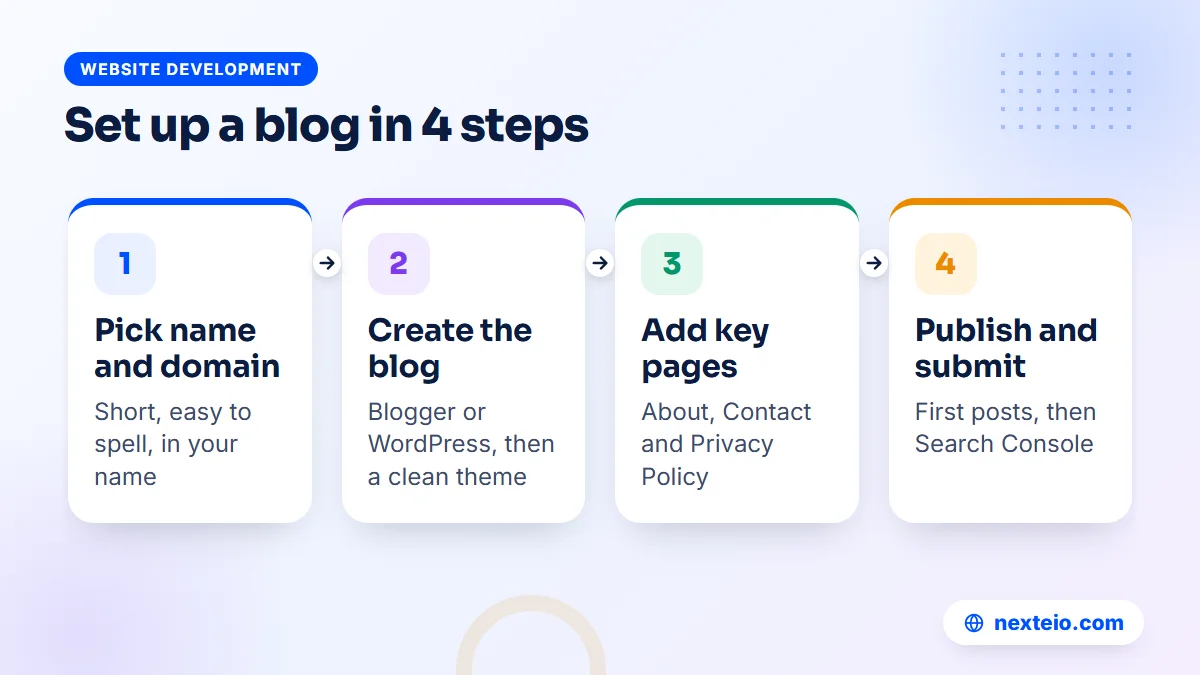
The whole setup can be done in a day. Resist the urge to spend weeks on colors and logos. If you would rather hand the setup to someone else, a ready-made Blogger setup gets you to the writing stage faster. Readers come for the posts, and you can improve the design once you know what readers actually use.
Create the Pages Every Blog Needs
Posts get the attention, but a few fixed pages tell readers, search engines and advertisers that a real person stands behind the blog. Add these before you start promoting it:
- About: who writes the blog, why, and what experience you bring. A real name and photo build more trust than a vague brand.
- Contact: a simple form or an email address. A blog with no way to reach the writer looks abandoned.
- Privacy Policy: required by Google AdSense and most ad or analytics tools. It explains what data the blog collects, such as cookies.
- Disclaimer: needed if you use affiliate links or write about health, money or legal topics.
Keep these pages short, true and in plain words. A privacy policy copied from another site, still naming that site, is a common reason AdSense reviewers lose confidence in a new blog. If you plan to apply for AdSense, our guide on getting AdSense help in Bangladesh covers what reviewers usually check.
Plan Your First Ten Posts
The hardest part of blogging is not the first post. It is the eighth, when the early excitement has gone. Planning ten posts before you publish the first one solves most of this.
Mix a few types of posts so the blog is useful from day one:
- How-to posts that solve one specific problem from start to finish.
- Answer posts that answer a single question people search for, clearly and quickly.
- Comparison posts that help readers choose between two or three options.
- List posts with practical items, not filler.
- Experience posts that share something you did, tested or learned first-hand.
Here is what a first set of posts might look like for three different blogs:
| Blog type | Example first posts |
|---|---|
| Personal tech blog | Best budget phones for students this year; how to save mobile data on Android; how to set up two-step login on Gmail |
| Coaching center blog | How to prepare for the admission test in three months; common mistakes in the math section; a weekly study routine that works |
| Garment factory blog | How we handle sampling and approvals; what our quality checks cover; our certifications explained |
Write the first three posts before you share the blog with anyone. A new visitor who finds three good posts is far more likely to come back than one who finds a single "Welcome to my blog" post.
Keep a running ideas list
Keep one note on your phone just for post ideas, and add to it whenever a friend, customer or reader asks you something. A question you have answered three times in person is almost always a post worth writing. When you sit down to write, you start from that list instead of a blank page.
How often to post
Consistency matters more than volume. One good post a week, every week, beats seven posts in the first week and nothing for two months. Pick a schedule you can keep during exams, busy seasons and Eid holidays, and write a few posts ahead so you always have something ready.
How to Write Posts People Finish Reading
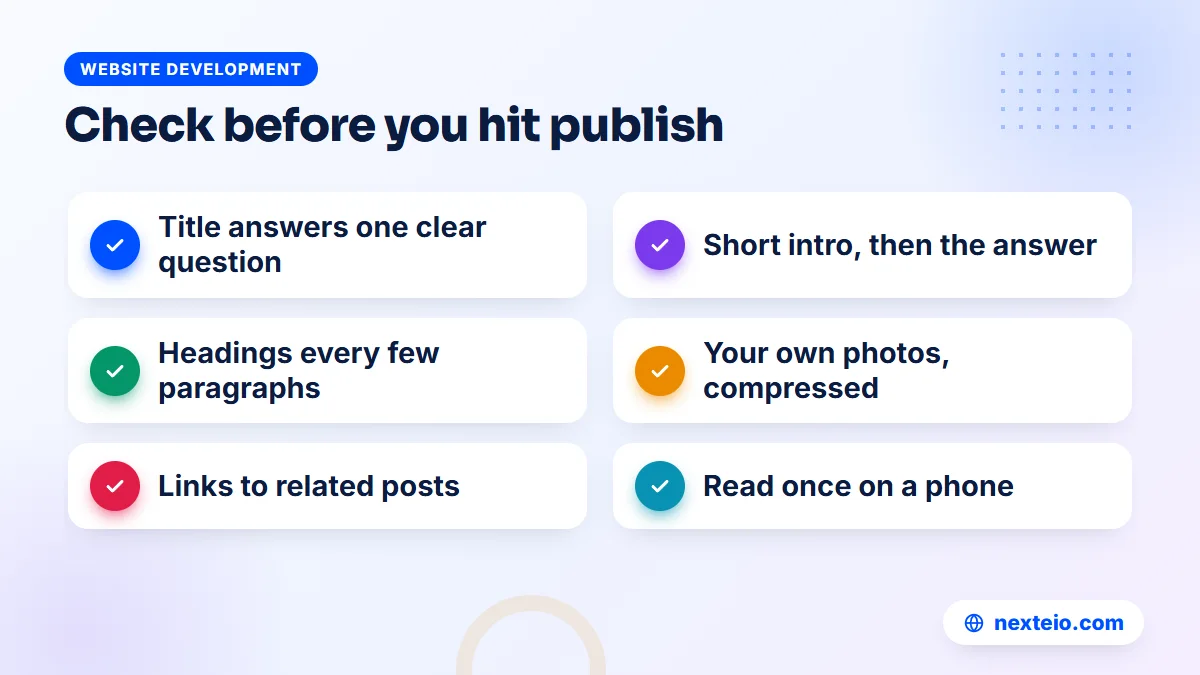
A blog post is not an essay. Most readers arrive on a phone, scan the page first and only read closely when they see the answer they came for. Writing for that habit is simple:
- Write a title that says exactly what the post answers.
- Answer the main question in the first few lines, then add detail.
- Use a heading every few paragraphs so readers can jump to the part they need.
- Keep paragraphs to two to four sentences.
- Use your own photos or screenshots where they help, compressed so they load fast.
- End with the next useful step, not a summary of what the reader just read.
Google's guidance on helpful, people-first content is worth reading once. It asks whether a post shows real experience, whether it leaves the reader satisfied, and whether it was written mainly for people or mainly to rank. Those questions are a good editing checklist for any post.
Photos and copyright
Do not take images from Google search results. Most are owned by someone, and using them can bring copyright complaints, removal requests and problems with AdSense. Use your own photos, screenshots you made, or images from sources that clearly allow reuse, and credit them where the license asks.
For deeper help with structure and wording, read our guide on writing SEO-friendly content that people read. If you plan to turn posts into short videos for Facebook or YouTube, our video editing service can cut your footage into clips that point viewers back to the blog.
Basic SEO So Google Can Find Your Posts
When you open a blog, nobody knows it exists. Most long-term readers will come from Google, so a few SEO basics are worth doing from the first post. None of them needs technical skill.
- Verify the blog in Google Search Console. Search Console is free, shows which searches bring readers and warns you about problems. Submit your sitemap there.
- Write a clear title and search description for every post.
- Keep URLs short and readable, using a few words from the title.
- Link related posts together, so readers and Google find older posts.
- Describe images with short alt text that says what the image shows.
- Keep the blog fast, with a light theme and compressed images.
Expect search traffic to take time. New blogs often see very little from Google for the first few months, and then a gradual rise as more posts get indexed and trusted. Our article on how long SEO takes to show results explains why, and our guide to internal linking shows how to connect posts so each new one helps the older ones.
Use Search Console to find your next posts
After a month or two, open the Performance report in Search Console and look at the searches where your posts appear. You will often find questions you never wrote about directly, with your blog showing on the second or third page. Those are your best next topics. Write a focused post for each one, or expand the existing post so it answers the question fully.
Related guides for new bloggers:
- What SEO is and how it brings in readers and customers
- Common SEO mistakes that hurt websites
- How faster pages help you rank
Promote Your Blog Without Spamming People
Waiting for Google alone can be slow and discouraging. A little steady promotion brings your first readers and the early feedback that helps you write better. The key is to share where your post is genuinely useful, not everywhere at once.
- Your own circle first: share new posts on your Facebook profile or page, with a line about why the post is useful.
- Groups and communities: answer real questions in relevant groups and link a post only when it answers the question better than a comment could.
- Short video: a one-minute clip that explains the main tip, with the full post linked, works well on Facebook, TikTok and YouTube.
Two more channels take longer to build but last longer:
- Email: a simple email list lets regular readers know when a new post is up, without depending on any platform's reach.
- Customers: a business can send a useful post to existing customers when it answers a question they often ask.
Avoid posting the same link in dozens of groups. Group admins remove it, readers learn to ignore your name, and it adds nothing to your blog's reputation. For a business blog, paying a small amount to show a strong post to the right audience can make sense. Our Facebook ads service can set that up, and our guide on what a Facebook ads service should include explains the basics.
When and How a Blog Can Earn Money
Many people start blogging to earn, and it is possible, but it rarely happens quickly. A blog usually needs a solid number of useful posts and steady visitors before any income source pays well. Treat the first six months as building time, not earning time.
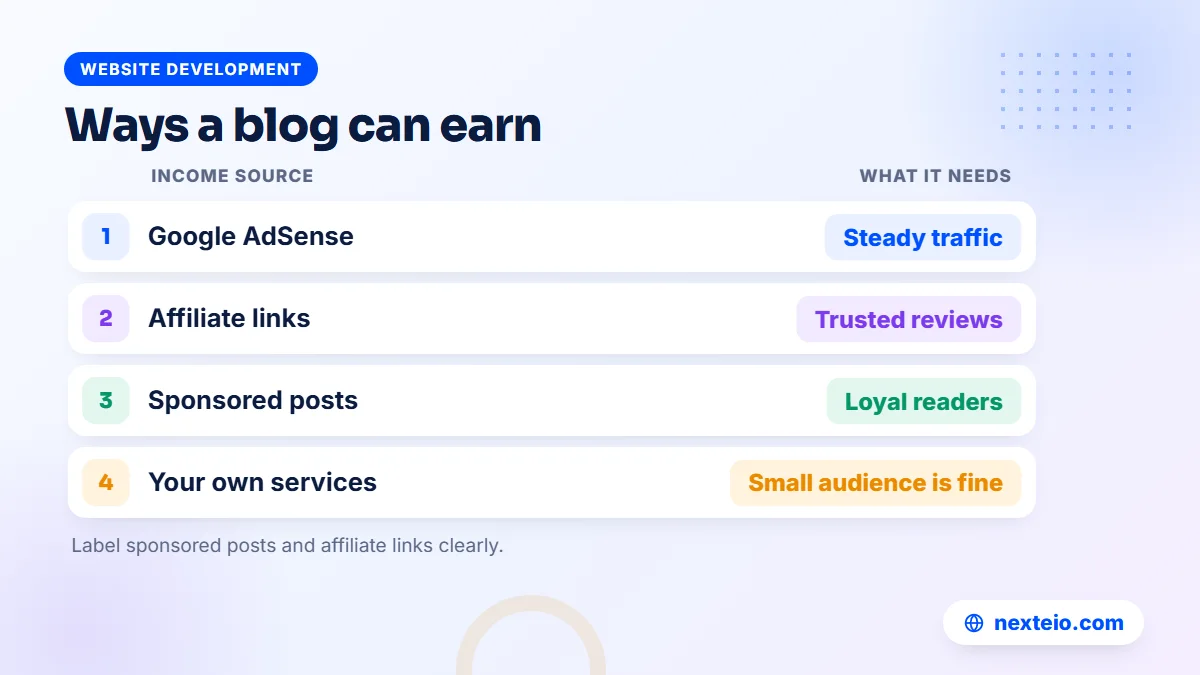
The main ways blogs earn are:
- Google AdSense: ads shown on your posts, paid by views and clicks. It needs original content, clear policy pages and enough visitors to add up. Check Google's AdSense eligibility requirements before you apply.
- Affiliate links: a commission when readers buy through your link. This works best for honest product reviews and comparisons.
Two other routes depend more on trust than on traffic:
- Sponsored posts: brands pay for a post or a mention. Always label these clearly.
- Your own services or products: a tutor, consultant, designer or shop owner can earn far more from one client than from months of ad income.
AdSense pays to bank accounts in Bangladesh, and Blogger has it built in, which is one reason so many local bloggers start there. Rejections are common for new blogs, usually because of thin posts, copied content or missing pages. If that happens, our Google AdSense service helps find and fix the causes before you apply again. Nobody can promise approval, because the decision belongs to Google.
How to Start a Blog for a Business, School or Organization
When an organization decides to start a blog, the writing is rarely the hard part. The hard part is who writes, who approves and how the blog fits the website. Settle these early and the blog keeps going after the first month.
First, put the blog on your main website, under an address such as yoursite.com/blog. A blog on a separate free platform does little for your website's visibility, and readers who enjoy a post cannot easily reach your services or admission page.
Second, name one person responsible for the schedule, even if several people write. In a school, that might be a teacher who collects notices and articles. In a company, it might be someone in marketing who gathers ideas from sales and production. Agree how approval works, too. A post that waits three weeks for the managing director or the principal is a post that never goes out.
Third, choose topics that answer the questions your customers, parents or partners already ask. A hospital can explain how to prepare for common tests. A coaching center can share study plans. A factory can explain its quality process for overseas buyers. Each post should link naturally to the relevant service or page. For more on how a website turns these readers into inquiries, read our guide on building a professional business website.
If your organization needs a website with a blog that staff can update easily, send us your requirements through the project form.
A 90-Day Plan to Start Blogging
Here is a simple plan that turns everything above into a schedule. Adjust the pace to your time, but keep the order.
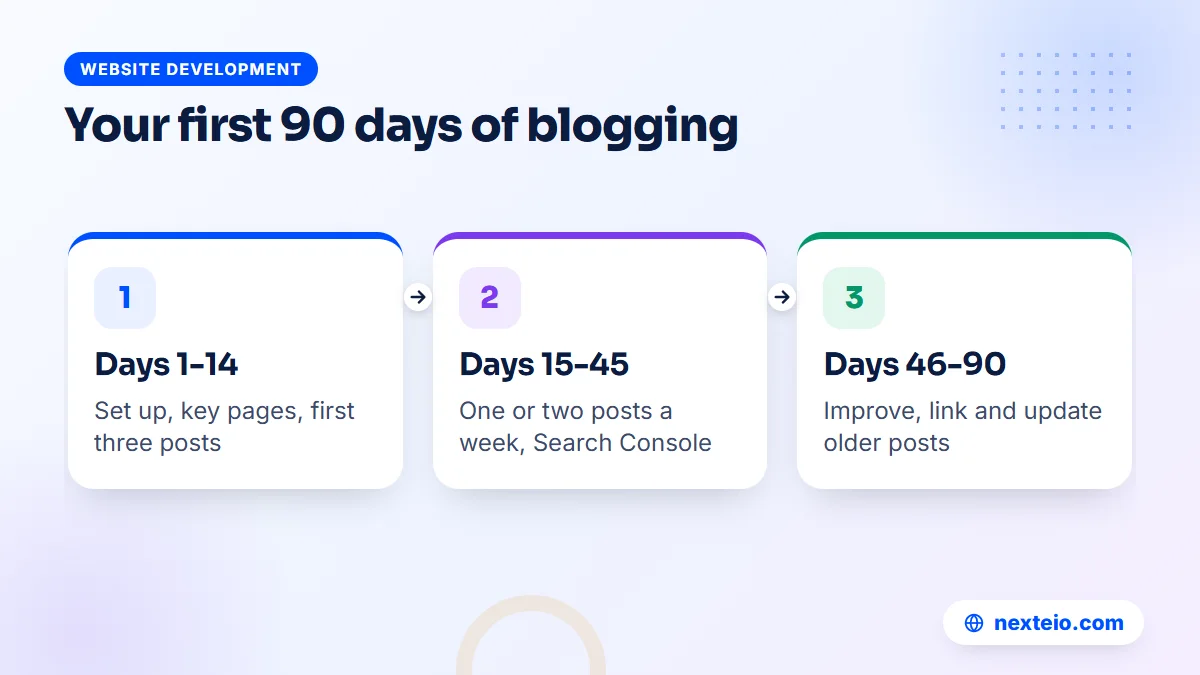
Days 1 to 14: set up and first posts
The goal of the first two weeks is a working blog with real posts on it, not a perfect design.
- Write the one-sentence purpose and the list of thirty post ideas.
- Register the domain, set up the blog and connect the domain.
- Create the About, Contact and Privacy Policy pages.
- Write and publish your first three posts.
Days 15 to 45: build the habit
This is the stretch where most new bloggers quit, so keep the targets small and steady.
- Publish one or two posts a week on a fixed day.
- Verify the blog in Search Console and submit the sitemap.
- Share each post once where it is genuinely useful.
- Note every question readers ask in comments or messages; each is a future post.
Days 46 to 90: improve what you have
By now you have enough posts to learn from, so spend part of your time improving rather than only adding.
- Check Search Console for posts that appear in searches, and improve their titles and content.
- Add links between related posts.
- Update early posts that now look thin next to your newer work.
- Decide whether to apply for AdSense, add affiliate links or focus on services.
By day 90 you will have fifteen to twenty posts, a working routine and real data on what readers want. That is the point at which most blogs either settle into a steady rhythm or quietly stop, and the plan above is built to get you through it.
Mistakes That Make New Bloggers Quit
Most people who start a blog and give up within months make one of a handful of mistakes. None of them is about talent, and all of them are easy to avoid once you can name them:
- Expecting traffic in the first month. Search traffic builds slowly. Judge the blog after six months of steady posting, not after six posts.
- Writing about everything. A blog that covers phones, recipes and politics gives neither readers nor Google a reason to come back.
- Copying or lightly rewriting other sites. It adds nothing for readers, it gets ignored by search engines, and it is a common reason for AdSense rejection.
- Changing the design every week. Time spent on themes is time not spent writing.
- Ignoring reader questions. Comments and messages are the best source of post ideas you will ever get.
If you start a blog with a clear purpose, a topic list and a schedule you can keep, you are already ahead of most new blogs. The rest is steady work, one useful post at a time.
How Nexteio Can Help You Start a Blog
If you want to start a blog on Blogger without spending days on settings, our Blogger website service sets it up for you. We connect your own domain, apply a clean theme that works on phones, set up the basic search settings, and can add essential pages such as About, Contact and Privacy Policy, so you can focus on writing from the first day.
If the blog belongs to a company, school, clinic or NGO, we build it into your main website on WordPress, so every post supports your service pages and your contact form. We can also help later with AdSense preparation, SEO and short videos to promote your posts.
You can read more about Nexteio, see examples in our portfolio, check the details of our Blogger setup service, describe your blog idea on our project form, or reach us through the contact page.
Keep reading: simple SEO tips for small websites, a practical guide to video editing for businesses, or browse all our website development guides.
Frequently asked questions
How much does it cost to start a blog in Bangladesh?
You can begin for free on Blogger with a blogspot address. Adding your own .com domain usually costs around BDT 1,500 to 2,500 a year. A self-hosted WordPress blog adds hosting, which for a small blog is often a few thousand taka a year, plus any paid theme or plugins you choose.
Should I write my blog in Bangla or English?
Write in the language your readers search in. Bangla posts often face less competition for local topics, while English posts reach a wider audience but compete with sites worldwide. If you use both, publish them as separate posts and type Bangla in Unicode so it displays correctly for everyone.
How long does it take for a new blog to get readers from Google?
Usually several months. Google needs time to find, index and trust a new site, and a blog with only a handful of posts has little to show. Most blogs see a slow start followed by gradual growth as useful posts build up and older posts are improved.
Can a Blogger blog on a blogspot address get AdSense?
Blogger blogs can apply for AdSense through the Earnings section, and the address alone does not decide approval. What matters is original, useful content, enough posts, and clear policy pages. A custom domain does make the blog look more professional to readers and partners.
How many posts should a blog have before applying for AdSense?
Google does not publish a fixed number. Focus on having enough complete, original posts that a reviewer can see the blog is useful and active, along with About, Contact and Privacy Policy pages. Thin or copied posts cause far more rejections than a low post count.
Can I use pictures from Google Images in my blog posts?
Not safely. Most images in search results are owned by someone, and using them without permission can lead to copyright complaints and problems with ad networks. Use your own photos and screenshots, or images whose license clearly allows reuse, and give credit where it is required.
Should a company blog be written by staff or by an outside writer?
The best results usually come from a mix. Staff know the real questions customers ask and can supply facts, examples and photos, while an editor or writer can turn that into clear posts on a steady schedule. Whoever writes, one person on your side should approve facts before posts go live.